





Autumn gives photographers a narrow window and a generous palette. The sun drops lower, the air holds moisture, and for a few weeks the trees offer colour that simply is not there in July. The temptation is to fire off hundreds of frames and sort them out later. A better approach is to arrive with a plan, shoot with a set in mind, and leave with fifteen or twenty images that feel as though they belong together.
Read the light before you read the leaves
Angle matters more than subject in autumn. A low sun rakes across a hedge or a stand of birch and turns an ordinary scene into something with depth, because every leaf casts a small shadow and every surface shows its grain. Midday, which is flat and unkind in summer, becomes usable for far longer.
Mist is the season's quiet gift. It forms on still, clear mornings after a cold night, most reliably over water, along valley floors and at the edges of fields. Arrive before sunrise, and expect the best light in the twenty minutes after it. Overcast days are equally valuable: colour stays saturated, highlights do not blow, and you can photograph leaves for hours without chasing shade.
Then there is backlight. Put the sun behind a leaf and meter for the bright areas, dialling in a stop or two of negative exposure compensation, and check the histogram rather than the screen. The veins will glow and the background will fall away. Bracket a few frames, because glowing leaves sit close to the edge of what a sensor can hold.
Watch colour temperature too. Leaves photographed in shade read blue and cold. Set a daylight white balance and warm the image slightly when editing rather than baking an orange cast into the file.
A shot list worth packing
Decide what the set needs before you leave the house. A simple list keeps a walk from turning into a wander:
- An establishing wide: a wooded avenue, a single tree against a field, a lane framed by hedges.
- A mid-range frame with a leading line: a path, a stream, a drystone wall, a fence running into the distance.
- A backlit leaf, veins lit from behind and the background thrown out of focus.
- A texture study: bark, moss, wet stone, gravel, ripples on a pond.
- A reflection in a puddle, canal or flooded field.
- A human element: a hand holding a leaf, boots on a path, a figure walking away. It gives scale and a story.
- One abstract: motion blur of falling leaves, or a pattern of soft out-of-focus colour.
Seven frames is a realistic morning's work if you shoot each one properly instead of hoping a walk will supply them.
Fallen leaves: get low, get close
The standing-height carpet shot rarely works. From eye level, a thousand leaves merge into a brown mush with no focal point. Kneel, sit, or lie down and put the camera at leaf level. A beanbag or a folded jacket under the lens is steadier than your elbows and lets you work slowly.
Choose a specimen, not a crowd
Look for one leaf that is intact and interesting, then find something for it to sit against. A red maple leaf on grey tarmac, a yellow one on dark moss, a curled oak leaf on wet slate. Contrast does the work; you do not need a spectacular scene, just a clear relationship between two surfaces.
Work the focus and the wind
Use manual focus with magnification, and wait for a lull between gusts. Take three or four frames of the same subject with slightly different focus points and choose later. A standard lens or a short macro covers most of it; extension tubes are a cheap way to get closer without buying glass.
Rain improves fallen leaves enormously. Colour deepens, veins sharpen and the gloss gives you highlights to place deliberately. Dry, curled leaves offer a different pleasure: graphic shapes and hard shadows that reward side light.
Textures, weather and the quieter frames
Fill the frame with one surface and let the pattern carry it. Ferns, lichen, dry seed heads, rusted gates, wet roof slate, the weave of a wool scarf. Light direction decides whether texture reads at all. Side light reveals it, front light flattens it, so move your feet before you move your settings.
Not every image needs to be a hero. A cohesive set is held together by quiet frames: a patch of moss, soft ochre bokeh, a wet bench. Add two or three and the louder images have somewhere to sit.
Think in sets, not singles
Choose a palette before you edit: rust, ochre, moss green and slate grey is plenty. Keep the crop ratio consistent across the set, and keep the treatment consistent even when the subjects vary. If a photograph is lovely but does not fit the palette or the mood, leave it out. A tight set of twelve images reads as deliberate; thirty mixed frames read as a camera roll.
Vary distance and light rather than mood. Wide, mid-range, macro. Backlit, overcast, misted. The variety holds attention while the consistency tells the viewer these pictures were made by the same eye.
Editing for a consistent palette
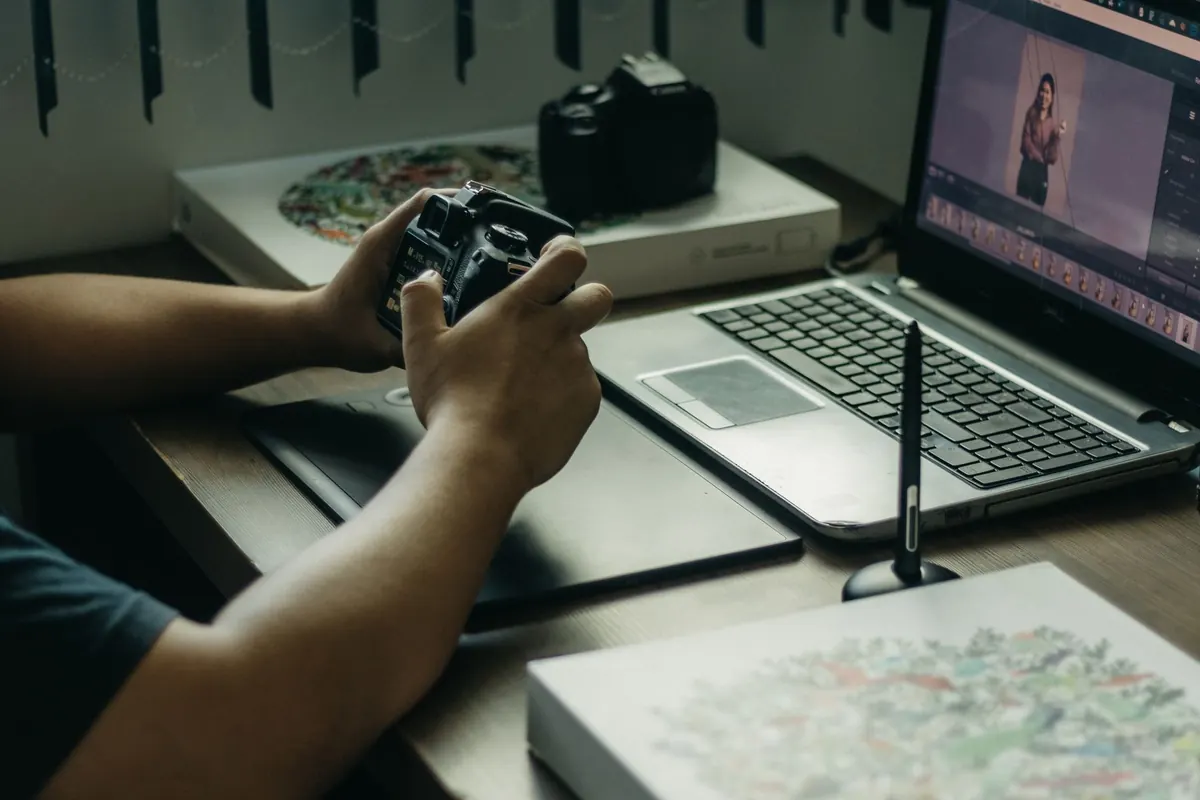
Start with white balance and exposure, then recover highlights and lift shadows only slightly, or the leaves turn to plastic. In the colour controls, nudge orange and yellow hue a little and pull back the saturation of greens so the leaf colour speaks for itself. Choose one tone curve approach — lifted blacks for a matte feel, or deeper contrast — and apply it across every frame. Dodge and burn to guide the eye, sharpen selectively, and be gentle with images shot at high ISO in shade, where noise lurks in the shadows.
A practical autumn checklist
Before you head out, run through the kit and the practicalities:
- Two charged batteries and a spare memory card — cold weather drains power faster than you expect.
- A microfibre cloth and a blower for rain, dust and condensation when you come back to a warm car.
- A lens hood, and a polarising filter for wet leaves and reflections. It costs you a stop or two of light, so pack a way to steady the camera.
- A tripod or beanbag for low light, mist and macro work.
- A waterproof layer, gloves with the fingertips free, and a mat or plastic bag to kneel on.
- A notebook or phone note for locations, times and settings worth returning to.
Respect the place while you work. Do not strip leaves from trees for a composition, stay on paths in nature reserves, check access rules before crossing private land, and take everything home with you.
Back at the desk, choose fifteen to twenty images, sequence them for rhythm and colour, and keep the rest out of sight for a week. Print four of them small and pin them up. If they look like one body of work rather than four separate pictures, the set is finished.
Photo: HolgersFotografie / Pixabay